If you can browse Daangn (당근, also called Karrot) but cannot message the seller, check the phone and neighborhood requirements. The app requires both before you can chat or close a deal.
What is actually stopping you
To chat or buy, Daangn asks for 본인인증, and it has to be a Korean phone number in your own name. The official copy is blunt: “당근은 휴대폰 본인인증 절차를 통해 서비스를 이용할 수 있어요,” and “타인 명의의 휴대폰 번호는 사용할 수 없어요.” If the phone holder and the account holder differ, “계정이 제한될 수 있어요.”
On top of that there is a neighborhood lock. 동네 인증 checks whether “회원의 위치가 특정 구역 내지 행정동 단위에 속하는지,” about a 6km radius around where you actually are. You only see and reach sellers near you. There is no “whole of Korea” setting. And the whole app is Korean-only, so even looking around needs a translation app.
Daangn does have its own pay, 당근페이 (Daangn Pay), for sending money to the seller from inside the chat, but it runs on a Korean bank account, so without one you are paying cash at the meetup. There is no checkout or shipping button either: you agree on pickup or delivery with the seller in the chat. So passing the check is not the finish line. You still have to bargain and meet in Korean.
Can you do it yourself?
If you are a resident, often yes. The official FAQ says “외국인도 추가 인증이 가능해요” using an 외국인등록증, 거소증, 영주증, or 여권 together with a Korean SIM. Once you pass the check and you are standing in your own neighborhood, you can chat, bargain, and meet. Use Papago or Google Translate to read the Korean-only screens.
But it fails in real cases: an expired ARC number, or a name mismatch between your Korean phone line and your ID. Borrowed numbers and VoIP do not work.
If you are a tourist or overseas buyer, watch out for one big myth. There is a separate global Karrot app for Canada, the US, and Japan, but it does not show Korean Daangn listings, and it still needs a local carrier SMS number (VoIP and Google Voice are not accepted, and there is no other way). It will not get you to a Seoul seller. Without a Korean number that can pass 본인인증, you can look around but you cannot reliably sign up, message, or close a deal.
When doing it yourself will not work
Get someone to do it for you (a trusted Korean friend, or Toyoni) when:
- you are a tourist or overseas buyer with no Korean number that can pass 본인인증;
- your check fails on an expired ARC or a name mismatch;
- the seller is in a different neighborhood or far-away city the 6km lock will not show you;
- you cannot read or bargain in the Korean-only chat and want the deal closed right;
- you are worried about scams (the top fear Chinese and Reddit buyers warn each other about, since you pay the seller directly).
Buying on Karrot from abroad: what to expect
From the Karrot purchases we have made for buyers outside Korea:
- Some sellers only meet in person. Those listings can’t be bought remotely unless someone goes to them. We tell you before you pay.
- Listings go fast. Items get reserved or sold within hours, so send a few options at once.
- Prices are often negotiable, especially when you buy several items from the same seller.
- Ask for photos before it ships. For expensive items, we check that what arrives matches the listing before sending it on.
- Shipping abroad: we can ship it to you directly by EMS, or send it to a forwarding address you already use. For heavy items, compare both prices.
How Toyoni helps
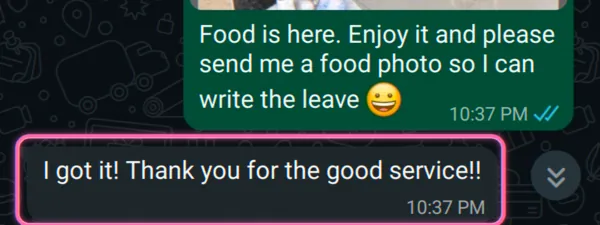
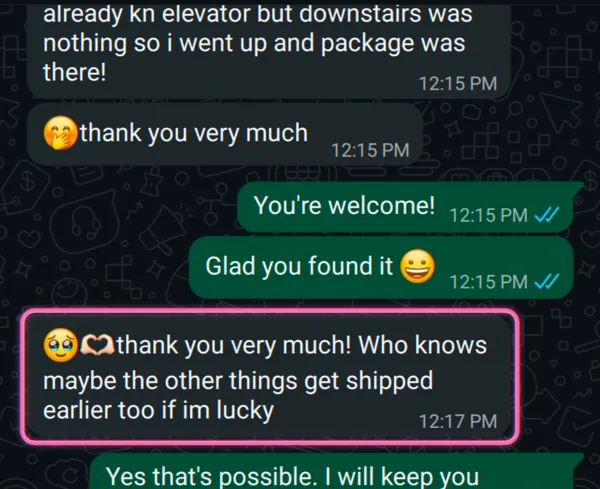
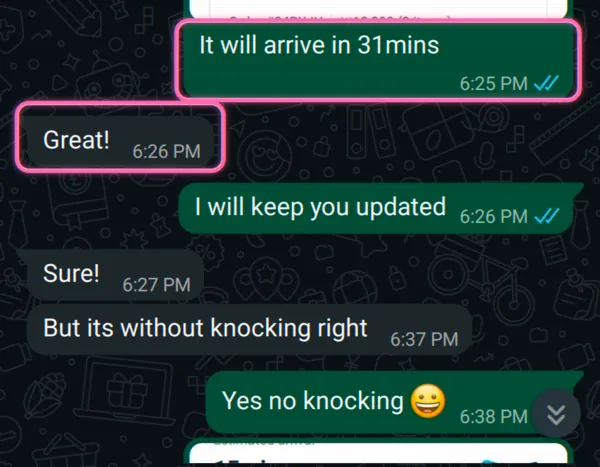
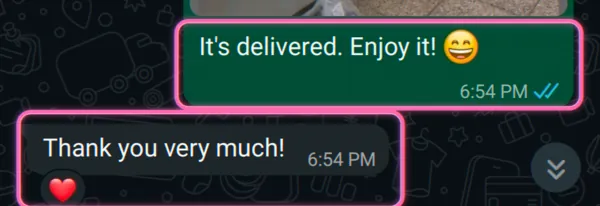
We search Daangn, message and negotiate with the seller in Korean from a verified local neighborhood account, review the listing for warning signs, and arrange a permitted pickup, delivery, and payment. We follow Daangn’s rules. If a listing or seller cannot be reached, we say so. You receive the relevant chat and handoff details as proof.
For a marketplace with a different flow, see the guide to Bunjang (번개장터).
If you want it new rather than secondhand, the same Korean-phone problem comes up in the big stores. See Coupang for almost anything, Olive Young for skincare and makeup, and Musinsa for clothes and shoes.
Throwing furniture or a mattress away instead of selling it? See Covering (커버링) for in-home pickup and how bulky-waste disposal works in Korea.